
Q3 Impact Report
Bloom is now a fully independent organisation and focused on spearheading evidence-informed philanthropy for mental health and wellbeing.
This quarter we’ve decided to spend more time on sourcing and evaluations and did not make new grants.
In Q3, we’ve also focused on internal strategy development as well as ecosystem building.
EXECUTIVE SUMMARY
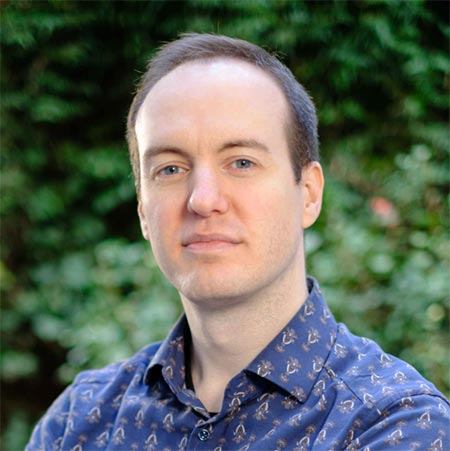
Peter Brietbart
Fund Manager
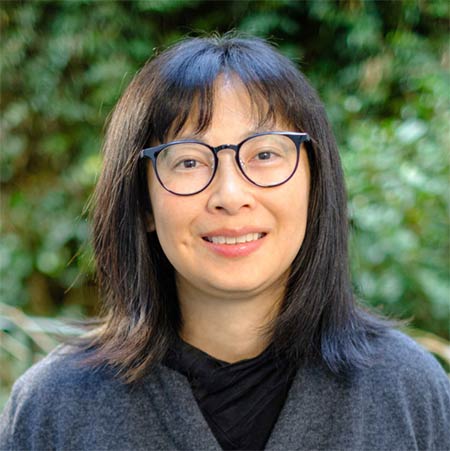
Lily Yu
Fund Manager
Autumn brings independence and an exciting new phase for the Bloom Wellbeing Fund.
Full managers’ insights
From bud to bloom
The Bloom Wellbeing Fund was founded and launched in December 2023 with seed funding from the Alpha-Epsilon Fund.
Leveraging our combined > two decade-long experience in grantmaking and effective giving, we – Lily and Peter – became joint fund managers in order to spearhead the initial design and piloting of the fund, initially as a project incubated within the Happier Lives Institute, a think tank which researches the most cost-effective opportunities for increasing subjective wellbeing.
During this pilot phase, we set out to understand several core questions that could help us to design a fund that could accelerate global happiness and wellbeing, including:
- Could we design an efficient and equitable process to identify and support the most exciting and impactful charities and researchers working on global mental health and wellbeing?
- Could we create a product to help busy philanthropists make impactful, tax-efficient donations to reduce global suffering?
- Could we help funders to gain regular insights into how their donations make a difference in the world through evidence-informed impact estimations and evaluations?
- Can we add value to the global health and wellbeing ecosystem to accelerate progress towards greater human flourishing, especially for under-served and neglected communities?
Bloom is creating value for grantees and philanthropists to move the needle towards more evidence-informed philanthropy in global wellbeing and mental health.
Over the past few months, speaking with and gaining advice from a wide range of charities, funders, and ecosystem builders, we have answers to the above that indicate that Bloom is creating value for grantees and philanthropists to move the needle towards more evidence-informed philanthropy in global wellbeing and mental health.
With this information, as of 1st September, we have decided to spin-out Bloom as an independent philanthropic organisation that supports funders, philanthropists, and charities to accelerate progress in global wellbeing and mental health.
Many philanthropists want to reduce suffering and help create flourishing lives with their wealth, but figuring out how is a real challenge. Bloom is a unique philanthropic fund that leverages the best available evidence throughout our grantmaking decisions. With a mission to improve global wellbeing and mental health by supporting cost-effective charities and interventions, we use the Wellbeing Life Year, or WELLBY, as the metric for the majority of our impact evaluations. It’s a simple idea: if we ask you how you’re feeling about your life on a 0-10 scale, and we can improve your answer to that question by 1 point for 1 year, we’ve created a Wellbeing Life Year.
Estimating the impact of charitable interventions using the WELLBY allows us to better understand how much wellbeing each grant creates. For more established organisations, that will be by way of rigorous evidence (such as meta-analyses, randomised controlled trials and other forms of charity-specific data). For younger projects, it may be grounded in impact estimation models based on theories of change and cost-effectiveness, strong teams, and potential for scale.
We’re working towards a world in which people have better wellbeing, improved mental health, less suffering, and live happier lives.
Bloom’s theory of change outlines that through grantmaking to support charities and research, through partnerships and ecosystem building, we can advance the field of wellbeing philanthropy and support organisations serving the communities most in need.
We’re working towards a world in which people have better wellbeing, improved mental health, less suffering, and live happier lives.
We would love to work with more like-minded partners to accelerate progress towards a happier world, together.
GRANTEE UPDATES
Top Level Updates
This quarter, our newest grantees, StrongMinds and Friendship Bench, have been making strides to scale their low-cost psychotherapy delivery models in Africa by strengthening collaboration with governments in Uganda, Zambia, and Zimbabwe.
The World Wellbeing Movement has expanded its team by recruiting a new Head of Policy & Public Affairs who will lead the organisation’s evidence-based policy portfolio to influence the UK government to develop policies focused on wellbeing and to move beyond GDP.
Also in the UK, Dr Alberto Prati has been making progress on a new meta-analysis study to explore ways to improve the accuracy of wellbeing measurements.
Finally, in the US, after Lykos Therapeutics’ application for approval of MDMA-assisted therapy for chronic PTSD was declined by the FDA, Healing Breakthrough has refocused on supporting randomised controlled studies to gather evidence on the effectiveness and safety of MDMA-AT as well as working with leading academics and experts in PTSD and trauma, to educate policymakers and politicians in Congress and the Senate on the current evidence on MDMA-AT.

Scalable community-based group therapy
Q2 Grant Size
$100,000
Activity

We fund four categories of projects:
A. Charities
Identify & fund charities delivering evidence-informed / high expected value programmes to improve wellbeing
B. Research
Support research that can provide insights into more effective ways of improving global wellbeing
C. Partnerships
Develop strategic partnerships to share insights on best practices and co-fund wellbeing & mental health initiatives
D. Ecosystem
Support leading ecosystem players raise awareness of evidence-informed, cost-effective wellbeing initiatives
Charity
Stage
Our internal working description of a project’s stage is when one or more of the following conditions are met:
Early stage
5 or fewer employees, 3 years or younger, grant sizes of ~$5k-150k awarded
Growth stage
5 – 250 employees, 3 – 10 years in operation, grant sizes of ~$150k-990k awarded
Mature stage
251+ employees, 10+ years in operation, grant sizes of $1m+ awarded
These groupings are only illustrative, and we recognise that from time to time an organisation won’t fit neatly into one of these groupings.
We aim to primarily fund Early and Growth stage organisations.
Growth
Location
Uganda, Zambia
More Info

StrongMinds’ goal is to provide group talk therapy for depression to 335,000 clients, a 40% year-over-year increase, by the end of 2024. As of the end of August, 239,000 clients (primarily women and adolescents in Uganda and Zambia), were treated – matching the total number of people reached in all of 2023. The team is on track to meet their treatment targets for the year.
Additionally, this quarter, in conjunction with an Inter-Ministerial Committee for Mental Health, StrongMinds Uganda launched a pilot in Masaka to test government-led and partially funded interpersonal psychotherapy group (IPT-G) delivery. This pilot marks a major step towards their long-term vision of enabling governments to independently deliver depression treatment to their populations.
StrongMinds Zambia, in collaboration with the Ministry of Education in Zambia, launched a pilot to integrate an Adolescent Therapy Groups model into public schools. Progress was initially halted by a cholera outbreak but has since expanded to 17 schools.
StrongMinds is currently falling short of its $13 million fundraising goal for 2024 and is adjusting its target and implementing strategies to address the shortfall.
Progress and milestones
On track to achieve major milestone to deliver cost-effective talk therapy at scale across Africa
As an organisation focused on scale, StrongMinds aims to reach 335,000 individuals with depression in Sub-saharan Africa. By August, the team had reached 71% of this target and is on track to reach this milestone by the end of the year.
StrongMinds goal is to achieve an average reduction of 8 points on the PHQ-9 depression assessment scale among their patients. Results for the year to date show an average reduction of 12.7 points, exceeding the target.
Pilots with governments in Uganda and Zambia launched
As part of their goal to work closely with government partners, this quarter there were major wins for StrongMinds teams in Uganda and Zambia.
StrongMinds Uganda launched a model district pilot in Masaka, a city in Southern Uganda, in partnership with the inter-Ministerial Committee for Mental Health including the Ministries of Health, Education Finance, the Office of the Prime Minister and others. This pilot, led and partially funded by the government, is a key step in enabling governments to build their capacity to independently deliver depression treatment to local communities.
StrongMinds contributed by providing psychosocial education for district leaders, trained health workers and teachers in IPT-G. Trained individuals are now delivering therapy in schools and communities in Masaka, and a portion of funds have been allocated by the district to support the project. The goal is to expand the pilot to five additional districts in 2025.
StrongMinds Zambia in collaboration with the Zambian government, launched a pilot to integrate an Adolescent Therapy Groups (ATG) model into public schools. After overcoming initial delays caused by a cholera outbreak and severe droughts, the pilot started in three schools and is now providing therapy in 17 schools.
In 2025, StrongMinds plans to test peer-led and Community-Based Volunteer (CBV)-led therapy in schools to further integrate mental health support within Zambia’s education system.
Obstacles and risks
StrongMinds’ current major obstacle is in addressing their fundraising shortfall. Their original fundraising target for 2024 was $13 million but this has been adjusted to $10 million.
Additionally, the organisation is strengthening its fundraising capacity through strategic expansion including the hiring of a new Chief Development Officer who will join in late October.
In fundraising discussions, the team continues to leverage evidence collected by their data team to highlight the cross-cutting effectiveness of their programmes. Combined with cost-cutting measures and beneficial exchange rates in Zambia, these efforts have enabled the organisation to keep on track with their treatment milestone for 2024 without a significant increase in budget.
Insights into the next quarter
StrongMinds is expected to continue to scale in Uganda and Zambia using a volunteer-led therapy model through community volunteers, Ministry of Health volunteers, and public school teachers.
They are making steps towards further growth, with two government partnerships in Kenya laying the groundwork for broader expansion. Additionally, the team is working with the Ministry of Health in Malawi to deliver depression treatment in the country.

Delivering low-cost solutions to treat anxiety & depression
Q2 Grant Size
$150,000
Activity

We fund four categories of projects:
A. Charities
Identify & fund charities delivering evidence-informed / high expected value programmes to improve wellbeing
B. Research
Support research that can provide insights into more effective ways of improving global wellbeing
C. Partnerships
Develop strategic partnerships to share insights on best practices and co-fund wellbeing & mental health initiatives
D. Ecosystem
Support leading ecosystem players raise awareness of evidence-informed, cost-effective wellbeing initiatives
Charity
Stage
Our internal working description of a project’s stage is when one or more of the following conditions are met:
Early stage
5 or fewer employees, 3 years or younger, grant sizes of ~$5k-150k awarded
Growth stage
5 – 250 employees, 3 – 10 years in operation, grant sizes of ~$150k-990k awarded
Mature stage
251+ employees, 10+ years in operation, grant sizes of $1m+ awarded
These groupings are only illustrative, and we recognise that from time to time an organisation won’t fit neatly into one of these groupings.
We aim to primarily fund Early and Growth stage organisations.
Growth
Location
Zimbabwe
More Info

Building on the initial cost-effectiveness analysis (see our Q2 report), Friendship Bench (FB) has been focusing its efforts on scaling problem-solving therapy for the treatment of depression across Zimbabwe. This quarter, the team has developed a draft strategy for programmatic handover to the Government of Zimbabwe ensuring the evidence-based, Friendship Bench model is integrated into mainstream health services and scalable by 2028.
Additionally, monthly progress reports from the teams in six implementing provinces have been shared with external stakeholders, including district and provincial Ministry of Health and Child Care officials to demonstrate alignment and accountability.
As a young and fast-growing organisation, FB has also allocated efforts to aid organisational learning including talent development and training for staff members.
Progress and milestones
Production of a Friendship Bench Programme Strategy for effective government handover
The government handover strategy includes development of a draft plan to transfer FB’s programme to Zimbabwe’s government. The plan focuses on sustainability, scalability, and evidence-based practices and aims to integrate the programme into mainstream health services by 2028.
Development of a strategy to scale the Friendship Bench model to more operational districts in Zimbabwe
FB currently operates in 6 provinces and across the country and this new strategy will reach the remaining provinces. The final version of the strategy will be finalised in the next quarter with input from stakeholders, including funders, to align on expectations, risk mitigation strategies and secure the necessary resources for the next stage of implementation.
Promoting organisational learning and outreach
Monthly progress reports were submitted to policymakers and officials at the Ministry of Health and Child Care in all ten provinces. To aid standardised data usage across the organisation, meetings were conducted with implementation teams from six provinces: Bulawayo, Masvingo, Mashonaland West, Midlands, Matabeleland South, and Mashonaland Central.
Additionally, 66 employees attended the Narachi Leadership Training on ‘Cultivating Ownership and Accountability in Teams’ for managers, leaders and team members. Intended outcomes include improved team communication, cohesion, and workplace enthusiasm.
Obstacles and risks
The team has not expressed any new risks to their plans. With time it will be easier to understand how the government handover strategy is implemented and whether the programme can be scaled efficiently.
Insights into the next quarter
Friendship Bench will continue to work on the goals outlined above until completion. Additionally, it will be interesting to follow the coverage of two recent publications on Friendship Bench’s model:
- This ‘Friendship Bench’ is pulling on the healing power of grandmothers, PBS news, September 2024.
- Integrating a mental health intervention into PrEP services for South African young women: a human-centred implementation research approach to intervention development, Journal of the International AIDS society, July 2024.

Advancing wellbeing public policy
Q1 Grant Size
$140,000
Activity

We fund four categories of projects:
A. Charities
Identify & fund charities delivering evidence-informed / high expected value programmes to improve wellbeing
B. Research
Support research that can provide insights into more effective ways of improving global wellbeing
C. Partnerships
Develop strategic partnerships to share insights on best practices and co-fund wellbeing & mental health initiatives
D. Ecosystem
Support leading ecosystem players raise awareness of evidence-informed, cost-effective wellbeing initiatives
Ecosystem
Stage
Our internal working description of a project’s stage is when one or more of the following conditions are met:
Early stage
5 or fewer employees, 3 years or younger, grant sizes of ~$5k-150k awarded
Growth stage
5 – 250 employees, 3 – 10 years in operation, grant sizes of ~$150k-990k awarded
Mature stage
251+ employees, 10+ years in operation, grant sizes of $1m+ awarded
These groupings are only illustrative, and we recognise that from time to time an organisation won’t fit neatly into one of these groupings.
We aim to primarily fund Early and Growth stage organisations.
Early
Location
Oxford, UK
More Info

The biggest milestone for the World Wellbeing Movement this quarter is the hiring of an experienced Head of Policy & Public Affairs who will be leading the charity’s work to incorporate evidence-based wellbeing recommendations into UK public policy.
The team have also been using the UK election in July 2024 to increase public awareness and attention to prioritise population wellbeing through a series of national and regional publications and articles.
Progress and milestones
New Head of Policy & Public Affairs
After an extensive recruitment process, the World Wellbeing Movement has recruited Ben Wealthy, an experienced public policy professional to take up the position of Head of Policy & Public Affairs. Ben started at the end of September 2024 and will leverage his public policy experience and connections to help incorporate wellbeing evidence into UK public policy efficiently. He will be working closely with Executive Director, Sarah Cunningham as well as the WWM Board (including Prof. Lord Richard Layard) on the public policy programme.
UK Election Media Coverage
WWM also received media coverage around the UK election with two opinion pieces. The first article, Wellbeing is not a luxury, appeared in The Big Issue (a publication read by politicians, policy-makers and other influential people who are interested in social issues, as well as members of the public). The second piece was in Tortoise Media, whose readership includes a growing base of professionals, intellectuals, and socially engaged individuals who value in-depth, thoughtful journalism.
Influential Interviews
WWM also believe their work influenced interviews given by Lord Gus O’Donnell, former head of the UK civil service, and Prof. Lord Richard Layard on going beyond GDP and focusing on wellbeing.
Obstacles and risks
Staffing Challenges
This quarter highlighted the critical importance of having the right team in place to support strategic initiatives. Being short-staffed during the UK’s snap election, especially without a Head of Policy & Public Affairs, led to some implementation gaps and underscored the importance of this role in the organisation’s ability to influence public policy effectively.
Need for Flexibility
The team also learned the importance of maintaining flexibility to adapt quickly to unexpected challenges, such as the early UK election call.
Insights into the next quarter
Reinstating the APPG for Wellbeing Economics
In the next quarter, WWM aims to make progress in building cross-party support for the reinstatement of the All Party Parliamentary Group (APPG) for Wellbeing Economics, positioning WWM as the secretariat. Reinvigorating the APPG will be a crucial strategic platform to influence government policy directly from within. Primary efforts in Q4 will centre on re-engaging with MPs (rebuilding connections and creating new connections) and preparing the groundwork to revive the APPG in 2025. A major milestone this quarter was securing a meeting in November with Jo Swinson, former leader of the Liberal Democrats and founder of the APPG for Wellbeing Economics.
Key Networking Events
In parallel, Sarah will continue to leverage key networking events to advance stakeholder engagement. In Q4, she will attend the 7th OECD World Forum on Wellbeing in Rome.
Delivering low-cost solutions to treat anxiety & depression
Q2 Grant Size
$150,000
Activity
We fund four categories of projects:
A. Charities
Identify & fund charities delivering evidence-informed / high expected value programmes to improve wellbeing
B. Research
Support research that can provide insights into more effective ways of improving global wellbeing
C. Partnerships
Develop strategic partnerships to share insights on best practices and co-fund wellbeing & mental health initiatives
D. Ecosystem
Support leading ecosystem players raise awareness of evidence-informed, cost-effective wellbeing initiatives
Charity
Stage
Our internal working description of a project’s stage is when one or more of the following conditions are met:
Early stage
5 or fewer employees, 3 years or younger, grant sizes of ~$5k-150k awarded
Growth stage
5 – 250 employees, 3 – 10 years in operation, grant sizes of ~$150k-990k awarded
Mature stage
251+ employees, 10+ years in operation, grant sizes of $1m+ awarded
These groupings are only illustrative, and we recognise that from time to time an organisation won’t fit neatly into one of these groupings.
We aim to primarily fund Early and Growth stage organisations.
Growth
Location
Zimbabwe
More Info
Building on the initial cost-effectiveness analysis (see our Q2 report), Friendship Bench (FB) has been focusing its efforts on scaling problem-solving therapy for the treatment of depression across Zimbabwe. This quarter, the team has developed a draft strategy for programmatic handover to the Government of Zimbabwe ensuring the evidence-based, Friendship Bench model is integrated into mainstream health services and scalable by 2028.
Additionally, monthly progress reports from the teams in six implementing provinces have been shared with external stakeholders, including district and provincial Ministry of Health and Child Care officials to demonstrate alignment and accountability.
As a young and fast-growing organisation, FB has also allocated efforts to aid organisational learning including talent development and training for staff members.
Progress and milestones
Production of a Friendship Bench Programme Strategy for effective government handover
The government handover strategy includes development of a draft plan to transfer FB’s programme to Zimbabwe’s government. The plan focuses on sustainability, scalability, and evidence-based practices and aims to integrate the programme into mainstream health services by 2028.
Development of a strategy to scale the Friendship Bench model to more operational districts in Zimbabwe
FB currently operates in 6 provinces and across the country and this new strategy will reach the remaining provinces. The final version of the strategy will be finalised in the next quarter with input from stakeholders, including funders, to align on expectations, risk mitigation strategies and secure the necessary resources for the next stage of implementation.
Promoting organisational learning and outreach
Monthly progress reports were submitted to policymakers and officials at the Ministry of Health and Child Care in all ten provinces. To aid standardised data usage across the organisation, meetings were conducted with implementation teams from six provinces: Bulawayo, Masvingo, Mashonaland West, Midlands, Matabeleland South, and Mashonaland Central.
Additionally, 66 employees attended the Narachi Leadership Training on ‘Cultivating Ownership and Accountability in Teams’ for managers, leaders and team members. Intended outcomes include improved team communication, cohesion, and workplace enthusiasm.
Obstacles and risks
The team has not expressed any new risks to their plans. With time it will be easier to understand how the government handover strategy is implemented and whether the programme can be scaled efficiently.
Insights into the next quarter
Friendship Bench will continue to work on the goals outlined above until completion. Additionally, it will be interesting to follow the coverage of two recent publications on Friendship Bench’s model:
- This ‘Friendship Bench’ is pulling on the healing power of grandmothers, PBS news, September 2024.
- Integrating a mental health intervention into PrEP services for South African young women: a human-centred implementation research approach to intervention development, Journal of the International AIDS society, July 2024.
Dr Alberto Prati, Univ. of Oxford
Improving accuracy of wellbeing surveys
Q1 Grant Size
$150,000
Activity

We fund four categories of projects:
A. Charities
Identify & fund charities delivering evidence-informed / high expected value programmes to improve wellbeing
B. Research
Support research that can provide insights into more effective ways of improving global wellbeing
C. Partnerships
Develop strategic partnerships to share insights on best practices and co-fund wellbeing & mental health initiatives
D. Ecosystem
Support leading ecosystem players raise awareness of evidence-informed, cost-effective wellbeing initiatives
Research
Stage
Our internal working description of a project’s stage is when one or more of the following conditions are met:
Early stage
5 or fewer employees, 3 years or younger, grant sizes of ~$5k-150k awarded
Growth stage
5 – 250 employees, 3 – 10 years in operation, grant sizes of ~$150k-990k awarded
Mature stage
251+ employees, 10+ years in operation, grant sizes of $1m+ awarded
These groupings are only illustrative, and we recognise that from time to time an organisation won’t fit neatly into one of these groupings.
We aim to primarily fund Early and Growth stage organisations.
One-Off
Location
Oxford, UK
More Info

After a delayed start, Alberto and his team have moved forward with their research plans. They are currently working on the first-ever meta-analytical estimate of the confidence in the national life satisfaction mean score.
Progress and milestones
Alberto has spent time conducting empirical studies that contribute to a meta-analysis that compares life satisfaction from about 70 survey samples in France and the UK. In terms of their theoretical research, they are also developing the concept of an empirical confidence interval to aid greater understanding of the variance in wellbeing surveys.
The research was presented at the STATEC “Measuring Progress Workshop” in Luxembourg and it received praise and feedback from experts in the field of Wellbeing Research.
Obstacles and risks
Following discussions with national statistical data collection agencies across Europe, the team learned that some surveys are already testing the effectiveness of a buffer item (even though they neglect to report it). Therefore, the team concluded that buffer items are unlikely to significantly improve the reliability of Life Satisfaction data.
Alberto is now focusing on conducting further meta-analysis before considering alternative data collection studies.
Insights into the next quarter
Alberto and his team will focus on retrieving and analysing additional metadata from four surveys: the European Quality of Life Surveys (EQLS), European Values Study (EVS), European Social Survey (ESS), and the World Values Survey (WVS).
They will also conduct meta-analysis on available life satisfaction and wellbeing data from different European countries.
Wellbeing ecosystem building & development
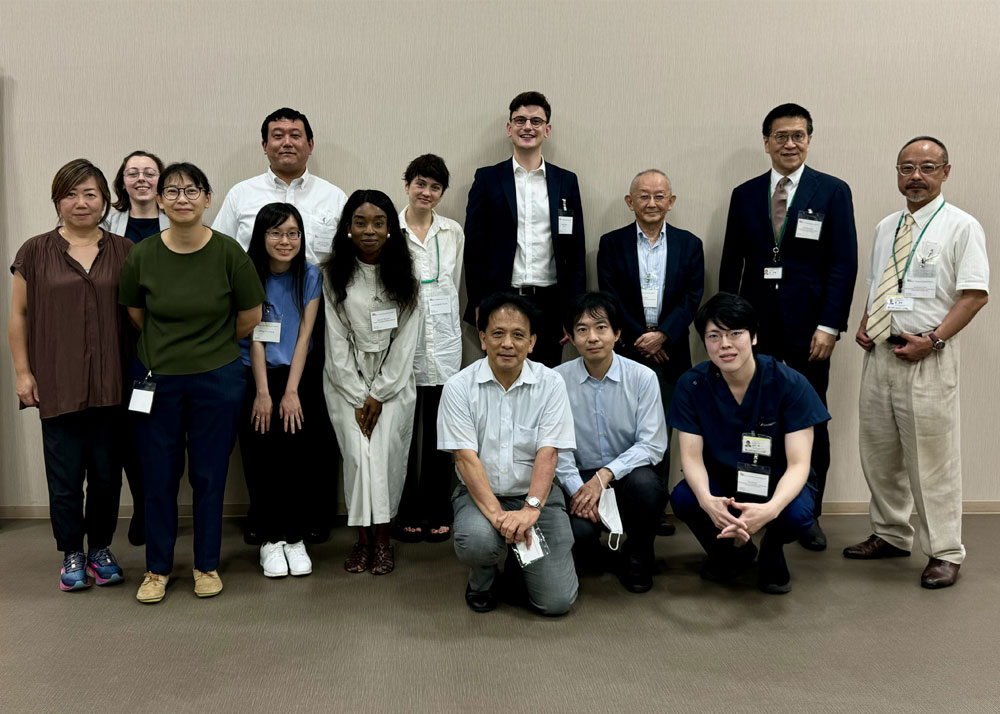
Mental Health Policy Research Symposium, Japan
5 September 2024
Lily Yu attended a Research Symposium on “Mental Health Matters – what are the policy priorities for Japan?”.
Organised by the International Longevity Centre UK (ILC UK) and held at the National Institute of Mental Health in Tokyo, the event brought together researchers, clinicians, policy advisors and funders from a range of organisations, including:
- WHO Centre for Health Development
- National Institute of Mental Health
- Japan Centre for Economic Research
- Health and Global Policy Institute
The symposium covered the impact that acute mental health conditions are having in Japan and policy solutions to reduce the impact of mental ill-health.
The ILC UK also presented data from China, Germany, Japan, UK and US on the proportion of health spending on mental health, suicide rates and the happiness ranking of the five countries based on the ILC index.
Nexus Global Summit
June 27th – 29th, 2024
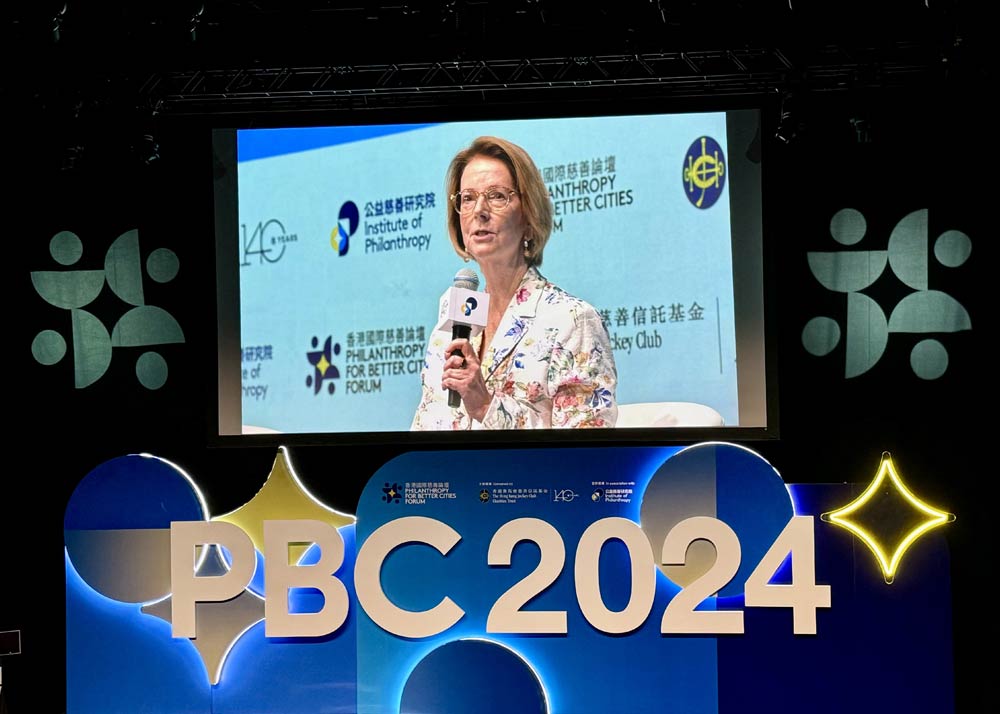
Lily Yu was invited to attend the Philanthropy for Better Cities Forum (PBC), one of the largest gatherings of philanthropic organisations in Asia.
The theme of this year’s forum was Delivering Impactful Philanthropy in the Real World and brought together Funds, Family Offices, Foundations and Investors working across the region.
Keynote speakers included:
- Julia Gillard (Former Prime Minister of Australia; Chair, Wellcome Trust)
- HH Princess Nouf bint Muhammad Alsaud (CEO, King Khalid Foundation)
- Agnes Binagwaho (Former Minister of Health, Government of Rwanda; Senior Lecturer on Global Health and Social Medicine, Harvard Medical School)
- Margaret Chan (Emeritus Director General, World Health Organization)
- Michael Spence (2001 Nobel Laureate in Economics; Philip H Knight Professor and Dean Emeritus, Stanford University)
- Laurence Lien (Chairman, Asia Philanthropy Circle)
Sessions covered diverse topics including The Economics of Giving, Redefining Impact in Philanthropy: Are we measuring the right things right? and Innovating Measurement: Can artificial intelligence help us avoid artificial impact?
In addition to connections with funders, Lily also connected with several charities, social enterprises and think tanks working on mental health and wellbeing in Hong Kong, China, Singapore, Thailand and other parts of Asia.
Join us to accelerate global wellbeing!
For more information about the Bloom Wellbeing Fund, please reach out to us: email Peter Brietbart at peter@bloomwellbeing.fund or Lily Yu at lily@bloomwellbeing.fund