
2025 Annual Review
2,200
hours spent on
sourcing & selection
12
grants made
50% more than 2024
1.3m
USD disbursed
89.3% increase to 2024
88,152
WELLBYs created*
182% increase to 2024
*A WELLBY is a 1-point increase in life satisfaction on a 0-10 scale for one year.
EXECUTIVE SUMMARY

Lily Yu
Fund Manager

Peter Brietbart
Fund Manager
Bloom’s work in 2025 reflects a deliberate balance between three complementary priorities: backing new organisations with strong potential, continuing to support high-performing grantees as they scale and integrate into systems, and expanding our focus beyond individual projects toward broader, field-level change.
Full managers’ insights
Alongside new grants, we have continued to re-fund organisations where early evidence and execution justify deeper partnership. This reflects our view that impact in mental health and wellbeing is rarely achieved through one-off funding. Instead, it requires sustained engagement, learning over time, and support as organisations move from pilot delivery toward scale, policy integration, or system ownership.
Across both new and continuing grants, we remain focused on cost-effectiveness, implementation quality, and the use of wellbeing outcomes as a common metric for assessing impact.
At the same time, Bloom has increasingly invested in work that operates upstream of individual programmes. This includes field-building, policy engagement, and the development of shared tools and standards for evaluating what improves human wellbeing. Through initiatives such as the Bloom Wellbeing Fellowship, convenings with researchers and policymakers, and the launch of the Human Priorities Lab fundraising initiative in collaboration with the London School of Economics and the University of Oxford, we are extending our role from capital allocator to systems builder.
The aim is not only to fund effective interventions, but to help shift how decisions are made across philanthropy and policy, so that more resources are directed toward what demonstrably improves people’s lives.
Bloom’s counterfactual impact
Bloom was founded in part because there is a very obvious gap in philanthropy: to our knowledge, there exists no other fund allocating capital based on wellbeing outcomes. Bloom remains the only fund that uses the WELLBY as its primary lens for evaluating and comparing impact across mental health and wellbeing interventions.
Without Bloom, funding decisions in this space would largely continue to be driven by proxy metrics such as health and wealth, narrative appeal, or cosmetic metrics such as reach and activity counts, with no consistent way to compare interventions or prioritise between them based on expected impact.
Bloom’s role is not just to use this approach internally, but to make it usable and normal elsewhere. By working with donor networks, peer funders, and grantees, Bloom has helped shift wellbeing measurement from something abstract or academic into a practical tool for real funding decisions. Without a fund actively demonstrating how wellbeing metrics can guide capital allocation and inform cross cause-area cost-effectiveness considerations, progress toward more evidence-led mental health funding would almost certainly have been slower and more fragmented.
Bloom’s contribution has been to accelerate that shift, reduce reliance on intuition-led decision-making, and help anchor mental health philanthropy more firmly in evidence about what empirically improves people’s lives – in their own judgement.
2025 Grant Impact
In 2025, Bloom invested more than 2,200 hours in sourcing, due diligence, and grant selection, reflecting a continued commitment to rigorous, evidence-informed grantmaking.
We made 12 grants, representing a 50% increase compared to 2024, and disbursed $1.31 million in grant funding—an 89% year-on-year increase. These grants are estimated to have generated 88,152 WELLBYs, a 182% increase relative to the previous year.
Collaboration remained central to our approach. By partnering closely with other funders, Bloom catalysed more capital towards wellbeing and mental health than ever before.
Approximately two-thirds (67%) of grants were co-funded alongside foundations and high-net-worth individuals, enabling greater scale and reducing fragmentation across the ecosystem. In parallel, Bloom strengthened its platform for longer-term systems impact. We secured a £1 million pledge (approximately $1,325,350 USD), alongside £135,000 in operating support (approximately $185,000 USD), to lead the development of the Human Priorities Lab, a new initiative designed to advance rigorous wellbeing research and embed it into UK policy decision-making.
Grants Summary
| Grantee | Project | Region | Category | Grant | Qtr | Co-fund | WELLBYs/ $1k | Total WELLBYs |
|---|---|---|---|---|---|---|---|---|
| National University Singapore | Global mental health in Asia 2025 symposium, Bloom Fellowship | Asia | Ecosystem | $15,000 | 25Q1 | No | ||
| World Wellbeing Movement | Wellbeing Policy, UK APPG | Europe | Ecosystem | $140,000 | 25Q1 | No | 53 | 7,420 |
| J-PAL South Asia | Community-based Mental Health support for Women in Tamil Nadu, India | Asia | Research | $220,000 | 25Q1 | Yes | ||
| Action for Happiness | Digital delivery of mental health support | Europe | Charity | $64,000 | 25Q2 | No | 40 | 2,560 |
| Happier Lives Institute | SWB research and mainstreaming evidence-based philanthropy | Europe | Charity | $200,000 | 25Q2 | Yes | 323 | 64,600 |
| Mental Health Literacy Collaborative | Community-based digital platform driving mental health literacy through schools | US | Charity | $100,000 | 25Q2 | Yes | 2.5 | 250 |
| Actra | CBT to reduce crime and improve mental health in Colombia | Latam | Charity | $105,000 | 25Q3 | Yes | 40 | 4,200 |
| Overcome | Digital delivery of therapy using trainee psychologists (volunteers) | Europe | Charity | $150,000 | 25Q3 | Yes | 48 | 7,200 |
| Vida Plena | Task-shifted CE group psychotherapy | Latam | Charity | $75,000 | 25Q4 | Yes | 12.17 | 913 |
| Novah | Wellbeing research (VAWG) | Africa | Charity | $90,000 | 25Q4 | Yes | 2.92 | 263 |
| PHlourish | Task-shifted CE group psychotherapy | Asia | Charity | $100,000 | 25Q4 | Yes | 4.29 | 429 |
| Rethink Wellbeing | Task-shifted CE group psychotherapy | Asia | Charity | $50,000 | 25Q4 | No | 6.34 | 317 |
| Total | $2,000,500 | Total | 119,382 | |||||
| 2024 | $691,500 | 2024 | 31,230 | |||||
| 2025 | $1,309,000 | 2025 | 88,152 | |||||
| % increase | 89.30% | % increase | 182.27% |
Global Reach
In 2025, Bloom’s grants supported projects in 8 countries, 5 of which were LMICs.
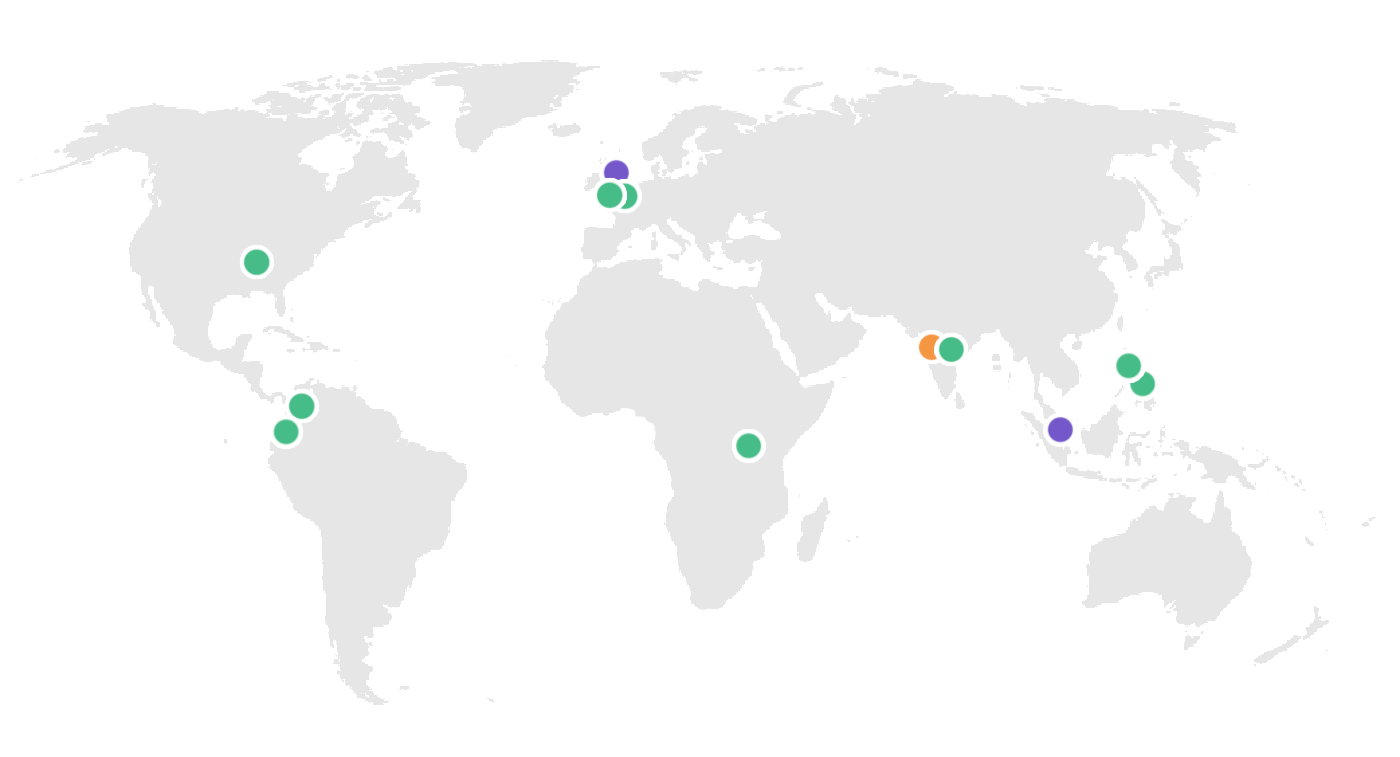
Mental health
Policy and ecosystem building
Wellbeing research
New therapies
Co-funding leverage
| Period | Co-funding | Bloom | Partner (s) | Total | Amount leveraged | Bloom’s leverage (multiples x) |
|---|---|---|---|---|---|---|
| 25 Q1 | J-PAL South Asia, Tamil Nadu | $110,000 | $110,000 | $220,000 | $110,000 | 2 |
| 25 Q2 | HLI | $150,000 | $50,000 | $200,000 | $50,000 | 1.33 |
| 25 Q2 | Mental Health Literacy Collaborative | $50,000 | $50,000 | $100,000 | $50,000 | 2.00 |
| 25 Q3 | Overcome | $35,000 | $115,000 | $150,000 | $115,000 | 4.29 |
| 25 Q3 | Actra | $20,000 | $85,000 | $105,000 | $85,000 | 5.25 |
| 25 Q4 | Vida Plena | $75,000 | $15,000 | $90,000 | $15,000 | 1.20 |
| 25 Q4 | Novah | $25,000 | $65,000 | $90,000 | $65,000 | 3.60 |
| 25 Q4 | PHlourish | $50,000 | $50,000 | $100,000 | $50,000 | 2.00 |
| $515,000 | $1,055,000 | $540,000 | ||||
| Bloom’s leverage to date (multiples x) | 2.05 |
Looking forward: 2026 goals
Bloom will continue to use data and evidence to deploy capital and create counterfactual impact. Our focus includes:
Conduct WELLBY-based cost-effectiveness analyses and in-depth evidence reviews for more than 20 organisations.
Make 10–15 grants to high-potential charities delivering scalable mental health and wellbeing interventions.
Support more funders to allocate capital towards effective and innovative wellbeing and mental health interventions, policy & research.
Partner with AIM to restructure and grow the Mental Health Funding Circle. Continue as Chair from Spring 2026.
Raise £5 million for the Human Priorities Lab, UK Wellbeing Policy initiative.
NEW GrantEEs
This quarter, Bloom recommended grants to four organisations delivering high-impact, evidence-based mental health interventions in Asia, Latin America, Africa and beyond.
Rethink Wellbeing
Grant Size
$50,000
Focus area
Mental Health Intervention
Location
Philippines
6.34
WELLBYs / $1k
set to increase to 73.75 at scale
Rethink Wellbeing delivers an evidence-informed, self-help programme complemented by online peer group cognitive behavioural therapy (CBT) sessions. The model was initially piloted across 35 predominantly high-income countries, and the organisation is now seeking to expand into low- and middle-income countries (LMICs) where 82% of mental health disorders occur but 90% receive no treatment due to lack of access.
Rethink Wellbeing aims to address a recognised delivery gap in the mental health landscape. In-person programmes often demonstrate strong engagement and effectiveness but face challenges in scaling due to operational constraints. Conversely, fully digital and self-guided interventions can scale rapidly but frequently experience low engagement and high attrition. By combining structured self-help content with facilitated online peer group CBT sessions, Rethink Wellbeing seeks to optimise engagement, effectiveness, and scalability within a single model.
Between 2023 and 2025, the organisation piloted its flagship CBT programme across four cohorts. Results indicate consistent improvements in positive mental health outcomes, reductions in mental health burden, and enhanced participant productivity.
This grant will support entry into LMIC markets, beginning with the Philippines, and the development of a scalable, AI-enhanced version of the field-tested CBT programme to enable broader and more cost-effective delivery.
Vida Plena
Grant Size
$90,000
Focus area
Mental Health Intervention
Location
Ecuador
12.17
WELLBYs / $1k
set to increase to 22.11 at scale
This grant provides continued support to Vida Plena, a leading organisation in Latin America delivering evidence-based Group Interpersonal Therapy (IPT).
In 2025, Vida Plena undertook rapid learning cycles and A/B testing to strengthen its service delivery model. A focused test to improve three- and six-month follow-up data collection resulted in a substantial increase in longer-term participant engagement. The organisation is also partnering with the University of Toronto to analyse engagement patterns, including enrolment rates, early drop-off prior to programme start, and barriers to participation.
Vida Plena continues to scale community-based mental health services through government partnerships across Ecuador. Following initial implementation in Quito, the programme expanded to Imbabura Province in 2025 and piloted delivery in the Amazon region (Tena and Puyo) and coastal cities (Manta and Guayaquil).
In 2026, the organisation will consolidate lessons from recent expansion, refine region-specific adaptations, and prepare for broader rollout. Expansion into three additional municipalities is planned, with initial government counterparts already identified.
PHlourish
Grant Size
$100,000
Focus area
Mental Health Intervention
Location
Philippines
4.29
WELLBYs / $1k
set to increase to 13.67 at scale
PHlourish is a Philippines-based mental health charity delivering low-cost, guided self-help support to adolescents—a critical developmental period for cognitive, emotional, and social wellbeing.
The need for youth mental health services in the Philippines is substantial. The country ranks second in Southeast Asia for healthy life years lost to mental health conditions among 5–24-year-olds (IHME, 2021). The 2021 Philippine National Survey on Mental Health and Well-being reported that 22.2% of children and adolescents experienced at least one mental health condition in the preceding year.
Guided self-help has been identified in the literature as a highly cost-effective intervention, with estimates of approximately $20 USD per annual one-point increase on the Satisfaction with Life Scale (SWLS) in low-income settings. In 2024, PHlourish conducted a pilot study showing promising results, with approximately 50% of programme completers improving by at least one category on the SWLS. Bloom is supporting PHlourish to strengthen its evaluation design by incorporating treatment and control groups to enable more robust assessment of effectiveness prior to further scale-up.
This project is a co-funding initiative between Affinity Impact and Bloom.
NOVAH
Grant Size
$90,000
Focus area
Mental Health Intervention
Location
Rwanda
2.92
WELLBYs / $1k
set to increase to 27.44 at scale
NOVAH (No Violence at Home) is a Dutch-registered NGO addressing violence against women and girls (VAWG) through an edutainment radio programme designed to shift gender norms and reduce intimate partner violence (IPV) in Rwanda. Radio-based interventions offer the potential to reach large audiences cost-effectively, making them a promising approach for population-level impact.
This grant will support data collection and analysis as part of a randomised controlled trial (RCT). The study aims to examine the relationship between reductions in VAWG and changes in subjective wellbeing. As rigorous evidence on edutainment approaches to preventing IPV remains limited, the findings from this RCT are expected to contribute valuable insights to the evidence base and inform the design and implementation of VAWG and IPV prevention programmes more broadly.
This project is a co-funding initiative between Ambitious Impact, an individual donor and Bloom.
Note on Kaya Guides
We were also interested in supporting Kaya Guides in India this quarter, as we believe they have developed a cost-effective mental health solution based on the WHO’s Step-by-Step (SBS) digital self-help program that can be delivered at scale through WhatsApp. Our estimates for cost-effectiveness are 9.48 wellbys per 1k USD in 2025 and 28.15 wellbys per 1k USD at scale, and would be considered a top mental health charity. However, they were able to secure funding from another funder during Bloom’s due diligence process, and we reserved our funds for future opportunities. We will continue to follow the organisation’s progress.
Grantee Annual Review
During 2025, our grantees operated in a constrained and uncertain funding environment, yet continued to deliver meaningful impact and strengthen the evidence base for effective mental health and wellbeing interventions. Sector-wide disruptions following the closure of USAID placed particular pressure on organisations working in low- and middle-income countries, where sudden funding gaps risked slowing delivery and halting learning. Against this backdrop, Bloom’s support helped stabilise core activities, preserve implementation capacity, and enable grantees to continue generating rigorous evidence rather than retrenching or deprioritising evaluation.
Looking ahead, the adaptability shown over the past year positions these organisations well for 2026. As funding uncertainty persists, the ability to combine cost-effective delivery with credible evidence will be increasingly important. The following section highlights key achievements from 2025 and outlines each organisation’s priorities for the year ahead.
Strongminds
StrongMinds is a US-based charity delivering group interpersonal psychotherapy (g-IPT) to treat depression, with a primary focus on women in Uganda, Zambia, and Kenya.
2025 update
In 2025, StrongMinds exceeded its annual target by treating approximately 650,055 individuals for depression—11% above its goal of 583,500—with 81% of participants being women. Programme delivery was concentrated in Uganda (45.4%) and Zambia (49%), with a further 5.5% reached through global partnerships in Kenya and Malawi. Notably, 90% of all clients were served in Uganda and Zambia, reflecting continued depth and operational strength in core geographies.
StrongMinds also expanded its government “Model District” approach in Uganda to nine districts in 2025 and began applying the same model in Zambia. Under this approach, district governments lead delivery of group depression treatment and engage in co-design, training, and joint supervision, alongside local co-financing. Each participating district now contributes in-kind resources—such as staff time and meeting space—equivalent to approximately 9% of therapy delivery costs in both Uganda and Zambia. This marks a significant step toward institutionalisation and long-term sustainability within public systems.
In parallel, StrongMinds completed a pilot randomised controlled trial (RCT) of its six-week IPT-G model in Mayuge District, Uganda. Endline and three-month post-treatment data collection were successfully completed in 2025. Findings from the pilot have informed the design of a larger, full-scale RCT planned for 2026, with the organisation’s Global Leadership Team formally approving progression to this next stage. Together, these milestones strengthen both the scale and the evidence base of StrongMinds’ model.
2026 priorities
- Reach one million depression sufferers in 2026 with Strongminds’ supported mental health services in Africa.
- Expand government-led delivery into 10 districts in Uganda, and pilot in at least one district in Zambia.
- Launch the 6-week IPT-G RCT by the end of Q2 in 2026.
Friendship Bench
Friendship Bench is a non-profit organisation delivering evidence-based treatment for mental health conditions, including anxiety and depression through Problem-Solving Therapy (PST) in Zimbabwe.
2025 update
Friendship Bench worked in close partnership with the Ministry of Health and Child Care to co-develop a national strategic and implementation plan, marking a significant step toward long-term government ownership. Through the FRIENDZ project, the partnership trained provincial and district teams, established supervision structures for mhGAP and PST delivery, and strengthened national mental health data systems. Advocacy efforts supported the ongoing review of the Mental Health Act and engagement with the Ministry of Finance on budget allocation. Together, these efforts positioned the Ministry to lead 2026 pilot programmes and laid the policy, systems, and operational foundations for scale across additional provinces.
Friendship Bench and the Ministry also rolled out standardised monitoring and evaluation tools nationwide and implemented a scalable Training of Trainers model across all 10 provinces. Over 9,000 core M&E tools—including registers, screening instruments, and reporting forms—were distributed nationally. The initiative directly capacitated 30 provincial implementation teams and over 2,000 community health workers in DHIS2, a web-based health management system, utilisation and mobile data collection. This systemic strengthening has enabled real-time provincial data management and reinforced programme fidelity at both facility and community levels.
Organisational stability was further secured through the successful recruitment of Dr Esther Tumbare as Chief Executive Officer in August 2025, ahead of the planned December transition timeline, succeeding Professor Dixon Chibanda. Under her leadership, Friendship Bench has continued to strengthen internal culture and change management processes, including weekly leadership forums, open Q&A sessions with provincial teams, and structured discussions focused on organisational values and cohesion—ensuring continuity, strong governance, and readiness for the next phase of scale.
2026 priorities
- Initiate the pilot phase across multiple provinces, generating practical insights to inform the development of a robust conceptual framework for national scale-up in 2027.
- Strengthen data-driven decision-making by embedding monitoring and evaluation tools within government health facilities.
- To support sustainable growth, a culture and change management consultant will be engaged in Q1 to implement a regeneration strategy.
World Wellbeing Movement (WWM)
The World Wellbeing Movement (WWM) is a UK charity dedicated to putting wellbeing at the centre of decision-making in business and public policy.
2025 update
This year, Bloom renewed its grant to support WWM’s strategic work, including the re-establishment of the All-Party Parliamentary Group (APPG) on Wellbeing Economics to embed wellbeing evidence more firmly within UK policymaking.
The APPG on Wellbeing Economics has now been formally revived and registered, with its inaugural meeting successfully convened and core infrastructure established, including a dedicated website and newsletter. The Group has launched strongly, with both the Chair and Co-Chair actively engaged in shaping and delivering its first-year strategy. An early meeting on wellbeing, economic growth, and the public finances was attended by six Parliamentarians. Membership has increased from 20 at registration in July to 24 at the time of reporting, exceeding the minimum threshold required for an APPG. The first e-newsletter has been distributed to over 100 subscribers, and an opinion piece co-authored by the Chair and Co-Chair was published in The House Magazine ahead of the UK Budget, raising the profile of wellbeing economics within Parliament.
WWM also produced the UK Wellbeing Report 2025 and launched it at a reception in the House of Lords. The event was attended by several Parliamentarians, including a senior Minister, alongside key stakeholders from across sectors. The report provides a comprehensive analysis of the state of wellbeing in the UK and has been disseminated through WWM’s networks and digital channels. While national media coverage was limited, the report was featured in the Scottish Herald. Planning for the 2026 edition is underway, with a clear focus on increasing policy impact through stronger narrative framing, clearer presentation of up-to-date data, and more actionable policy recommendations.
In addition, WWM submitted written evidence to the Business and Trade Committee as part of its consultation on priorities for 2026. The submission set out the case for integrating wellbeing into a modern growth strategy, highlighting research demonstrating the relationship between wellbeing, productivity, and long-term economic performance. It recommended that government work proactively with businesses to measure wellbeing across the economy and address the drivers of workplace wellbeing. The evidence is expected to be published in early 2026, and WWM has offered to provide oral testimony to the Committee.
2026 priorities
- Increase the prominence of the All-Party Parliamentary Group (APPG) on Wellbeing Economics
- At least 3 formal meetings, with at least one in collaboration with another like-minded organisation
- ≥25% increase in members
- Produce and distribute a simple explainer briefing to educate and inform Parliamentarians about wellbeing economics
- Develop a clearer policy agenda, along with educational materials targeting UK Parliamentarians
- Publish 3 short, well-designed, accessible briefings for Parliamentarians capturing evidence on 1) value for money on public investment in wellbeing, 2) the business case for wellbeing and, 3) the link between wellbeing and voting patterns.
- Submit written evidence to select committees/government consultations as relevant opportunities arise
- Produce one policy position statement on an important topic, pulling together key evidence and policy recommendations
- Secure at least one meeting with a Minister/senior advisor/official to discuss one of WWM’s policy recommendations
- Deliver a more impactful UK Wellbeing Report in 2026
- Secure 2-3 pieces of national media coverage
- Host a launch event, attended by Parliamentarians and other stakeholders
- Develop and promote (alongside the report) one clear policy ask
- Achieve at least one mention in Parliament
J-PAL South Asia
J-PAL is a global research centre that designs and rigorously evaluates anti-poverty and development programmes. J-PAL South Asia is leading a study of a community-based mental health intervention for elderly women in Tamil Nadu, incorporating measures of life satisfaction and assessing potential spillover effects on caregivers and other family members.
2025 update
Since receiving the grant, Wave 2 implementation and associated data collection for both elders and caregivers have been completed. The team has now delivered the full 12-week core intervention to all participants across Waves 1 and 2, completed endline surveys for elders and caregivers, and conducted the 6-month follow-up for Wave 1. Data cleaning has been finalised and analysis is underway, with preliminary findings scheduled to be shared with government partners early next year. Booster sessions continue across all participating panchayats, supported by real-time implementation monitoring to ensure quality and fidelity.
The Government of Tamil Nadu has expressed strong interest in a potential state-wide scale-up and has requested J-PAL’s support for independent process monitoring and facilitator training. A detailed proposal outlining this support has been submitted, positioning the programme for possible integration into public systems pending review of the evidence.
2026 priorities
- By April–May 2026, the team will complete the 6-month follow-up surveys across all waves of the community-based mental health programme for elderly women with depression in Tamil Nadu, generating critical evidence on the durability of early outcomes.
- Preliminary findings will be synthesised and shared with government partners by May–June 2026 to inform decisions on potential scale-up and integration into public systems.
- By October–November 2026, the 1-year follow-up surveys will be completed across all waves, providing robust longer-term data on sustained impact and cost-effectiveness.
Action for Happiness
Action for Happiness (AFH) is a UK-based charity and global movement committed to building a happier, kinder society by promoting evidence-based practices that strengthen community mental health and wellbeing.
2025 update
AFH developed the initial version of a new AI-powered engagement system capable of delivering daily email prompts and tailored follow-up responses to users. Significant internal testing and refinement of large language model prompts using the GPT-5 model from OpenAI were undertaken to ensure high-quality personalisation while maintaining alignment with the charity’s evidence-based approach.
A pilot cohort of more than 300 users has been recruited and is now actively testing the system on a daily basis. Baseline data, including Life Satisfaction scores and GAD-7 measures of anxiety, have been collected to enable rigorous pre–post evaluation of impact. Robust safety features have been embedded into the platform, alongside integration with the organisation’s Safeguarding team, ensuring appropriate oversight and risk management as the programme scales.
2026 priorities
- Launch large scale pilot of AI-based daily check-in programme with additional safeguarding and evaluation
- Increase social media/website reach from 15m to 30m people
- Grow the AFH community by a further 100,000 members
Happier Lives Institute
The Happier Lives Institute (HLI) is a UK-based research organisation dedicated to identifying and promoting the most cost-effective ways to improve global wellbeing through rigorous, data-driven analysis.
2025 update
This year, HLI published a chapter in the World Happiness Report, presenting the first global comparison of charities using WELLBYs (Wellbeing-Adjusted Life Years) per dollar donated. The analysis finds that the most cost-effective charities can be up to 1,000 times more impactful than typical organisations—meaning that $100 directed to a top-performing charity could achieve comparable wellbeing gains to $100,000 given to a standard one. This substantially exceeds previous expert assumptions and stands in stark contrast to public expectations: survey data collected by HLI suggest that most people estimate top charities to be only three times more effective than average. Building on this work, HLI launched the Living Review of WELLBY Cost-Effectiveness Analyses—an evolving resource drawing on evaluations from four independent evaluators. The platform synthesises the best available evidence across interventions, from treating depression to reducing lead exposure and addressing child malnutrition, enabling donors and policymakers to allocate funding where it can generate the greatest wellbeing gains.
During the same period, HLI was invited to advise HM Treasury in the UK on the integration of wellbeing metrics into public policy appraisal. In particular, HLI is consulting on updates to the Treasury’s Green Book wellbeing guidance, which shapes how major public spending decisions are evaluated. This engagement reflects growing recognition of HLI’s methodological leadership and creates a pathway for embedding wellbeing-based approaches more deeply into UK government decision-making.
HLI also produced a comprehensive global mental health cause area report, commissioned by Bloom, expanding beyond its earlier focus on mood disorders to assess the broader landscape of mental health conditions. The report highlights that mental health problems are among the most severe drivers of human suffering: depression and anxiety reduce life satisfaction by approximately one point on a 0–10 scale—around twice the impact of unemployment, divorce, or chronic physical illness. These conditions are also highly prevalent. An estimated 18% of the global population currently lives with a mental health condition, and lifetime risk for depression approaches 25%. Together, these factors account for 7.67% of the global health burden (measured in DALYs), comparable to malaria, tuberculosis, and HIV/AIDS combined. Despite this, mental health receives only 0.22% of health-directed aid, even though many common disorders can be treated effectively and cost-effectively, often for under $50 per person. Collectively, this body of work strengthens the evidence base for prioritising mental health and wellbeing within both philanthropy and public policy.
2026 priorities
- Complete one in-depth investigation into a new cause area—potentially including corruption or education—and conduct a full evaluation of one new charity, with candidates spanning ACTRA, Kaya Guides, parenting-focused interventions, pain treatment charities, VAWG initiatives, or lead exposure programmes.
- Raise $1.5m for HLI and recommended charities
- Establish one major policy partnership e.g. advising a HIC government on foreign aid.
Mental Health Literacy Collaborative
The Mental Health Literacy Collaborative (MHLC) is a non-profit organisation dedicated to spearheading mental health literacy (MHL) across U.S. schools and communities through education, policy guidance, and high-quality content development.
2025 update
To strengthen its evidence base, MHLC expanded its educator evaluation framework in partnership with research collaborators. While the original questionnaire measured gains in teacher confidence delivering MHL content, the revised tool now also captures life satisfaction and overall wellbeing. The expanded questionnaire was finalised in December 2025 and will be implemented from January 2026, aligning with the training of 1,500 educators in Q1 2026. This enhancement enables MHLC to assess both professional competence and educator wellbeing outcomes at scale.
To support scalable delivery, MHLC launched the MHL Aware Facilitator Platform and completed pilot training for a cohort of trusted community and education leaders from five states. The digital platform provides structured video modules, guided discussion prompts, and a comprehensive facilitation guide, enabling locally embedded leaders to deliver MHL Aware with fidelity while tailoring discussions to community needs. This model reduces training barriers, strengthens local ownership, and positions the organisation for rapid expansion into new regions.
MHLC also established strategic, long-term partnerships with the Association for Advancing Quality in Educator Preparation (AAQEP) and Music Theatre International (MTI). AAQEP, one of two national accreditation bodies serving more than 200 teacher preparation programmes across 38 states, will incorporate MHL into its certification expectations and recommend MHL Aware as an entry point. MTI—the largest provider of theatrical licensing services, reaching over 70,000 schools, universities, and arts organisations—will integrate an MHL overview and curated resource links into its customer communications. Together, these partnerships significantly expand MHLC’s institutional reach and accelerate pathways to national scale.
2026 priorities
- Launch of the Mental Health Literacy (MHL) programme evaluation tool
- Develop a Parent/Caregiver edition of the MHL Aware programme, broadening access to mental health knowledge and skills within families
- The Reframe model will be expanded to additional regions nationwide through a grant-based delivery approach, enabling scalable implementation
ACTRA
ACTRA is a non-profit organisation dedicated to improving mental health outcomes through crime reduction in Colombia. Its model integrates Cognitive Behavioural Therapy (CBT) to strengthen protective skills—such as conflict resolution and anger management—thereby reducing the risk of violence while improving psychological wellbeing.
2025 update
By the end of 2025, ACTRA completed its second main pilot in partnership with its government partner. Six facilitators were trained to deliver a 16-session curriculum, achieving a 90% implementation completion rate. The programme reached 344 individuals through at least one session, with 178 participants attending two or more sessions and an average attendance of four sessions. For evaluation purposes, 96 endline surveys were collected from the control group and 95 from the treatment group; analysis is currently underway.
In parallel, ACTRA conducted two smaller learning pilots to inform the development of Curriculum 3.0. The curriculum was delivered twice to groups of six adult participants, each led by a professional facilitator, with the aim of refining content and structure. The first cohort demonstrated a 0.15 standard deviation improvement across key psychological constructs in pre–post analysis. Following curriculum adjustments, the second cohort showed an increased effect size of 0.35 standard deviations, indicating meaningful gains from iterative refinement. Insights from these pilots are now informing the development of Version 3.0.
To strengthen organisational capacity ahead of further scale-up, ACTRA has also initiated recruitment for a Chief of Staff and a Monitoring, Evaluation, and Learning (MEL) Lead. The process has attracted 367 applications, with approximately two-thirds meeting initial screening criteria. Around 55 shortlisted candidates are currently progressing through recorded interviews and logic assessments, positioning the organisation to build a strong senior team to support its next phase of growth.
2026 priorities
- Implement a large-scale pilot involving approximately 200 participants, targeting attendance rates of at least 70% and demonstrable improvements in implementation quality, assessed through qualitative evaluation.
- Finish version 3.0 of the curriculum and deliver three learning pilots in new settings—ideally including schools and prisons—to test adaptability and effectiveness across contexts.
- Strengthen central capacity by recruiting at least one additional staff member at headquarters.
Overcome
Overcome is a UK charity that delivers cost-effective treatments for mental illnesses using trained graduate volunteers.
2025 update
At the beginning of the year, Overcome – like many charities was fully reliant on grant funding. Recognising both the limitations of an increasingly constrained philanthropic landscape and the desire to scale without displacing other high-impact organisations, it made a strategic decision to diversify its revenue model. Rather than competing for a larger share of limited grant funding, it invested in building earned income streams. As a result, the organisation now covers approximately 50% of its operating costs through the delivery of paid training programmes in high-income markets. At its current rate of growth, it is on track to achieve full cost coverage by 2027, creating a financially sustainable platform for expansion.
Alongside this shift, impact delivery has continued to grow. The organisation trained more than 200 coaches, who collectively provided over 8,000 hours of free psychotherapy to approximately 1,500 clients who would otherwise have been unable to access care – primarily in low- and middle-income countries and underserved communities in higher-income settings. In addition to expanding access to mental health support, the model also strengthens workforce development: most participating coaches secured paid mental health roles within three months of completing their placement, contributing to longer-term system capacity.
2026 priorities
- Deliver a minimum of 10,000 hours of free psychotherapy, expanding access to high-quality mental health care for underserved populations
- Generate revenue to cover 100% of core operating costs, ensuring financial sustainability and eliminating reliance on philanthropic grant funding
Wellbeing Ecosystem and Development
In 2025, Bloom strengthened our position as a mental health and wellbeing funder and ecosystem builder by partnering and influencing a range of philanthropic partners to invest in the organisations that we recommend. We thank the following organisations for their excellent partnership (listed alphabetically):
Affinity Impact
GDI
Live Better Foundation
Kokoro
We also collaborated and co-funded initiatives with several high-net-worth individuals.
Thank you for reading
As we look ahead, our ambition remains clear: to continue demonstrating that rigorous wellbeing measurement can guide better funding decisions, unlock more capital for effective interventions, and strengthen the credibility of mental health philanthropy. Bloom exists not simply to make grants, but to change how grants are made. By combining disciplined analysis, sustained partnerships, and field-building leadership, we aim to ensure that more philanthropic and policy capital is directed toward what demonstrably improves people’s lives, measured in their own terms.